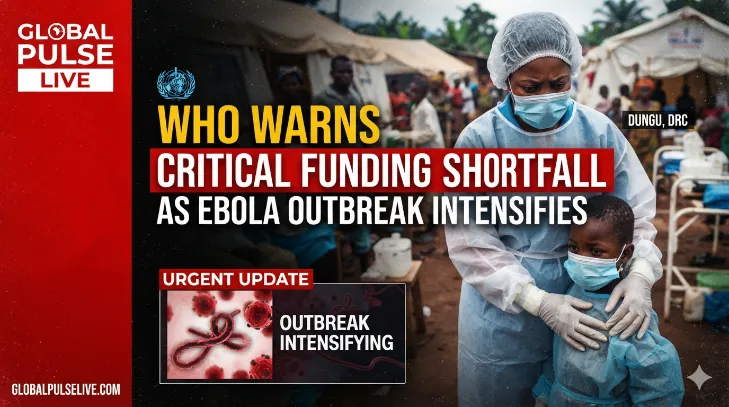

Global health officials are urgently assessing whether experimental vaccines and treatments still under development can be deployed to contain a rapidly worsening Ebola outbreak in the Democratic Republic of the Congo (DRC), as concern mounts over the speed of transmission and the risk of regional spread.
Speaking at the World Health Assembly in Geneva, World Health Organization Director-General Tedros Adhanom Ghebreyesus warned that the outbreak had grown dramatically since it was first announced. Health authorities have now recorded at least 500 suspected Ebola cases and 130 suspected deaths across affected regions in eastern DRC — more than double the figures reported only days earlier.
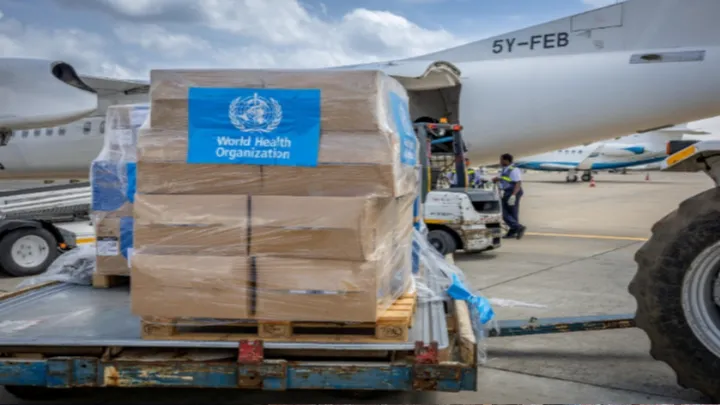
The outbreak has been linked to the Bundibugyo strain of the Ebola virus, a less common variant for which no approved vaccine or specific treatment currently exists. International health agencies are now exploring whether candidate vaccines or investigational therapies could be used under emergency measures.
Dr. Mesfin Teklu Tessema of the International Rescue Committee, which operates in DRC’s Ituri Province where the majority of infections have emerged, warned that the true scale of the outbreak was likely far greater than reported figures suggest.
“We expect the current cases are only the tip of the iceberg,” Tessema said, adding that the virus crossing into neighboring South Sudan was likely “a matter of when, not if.”
He described severe shortages of protective equipment for frontline healthcare workers, including gloves, masks, and goggles, raising fears that already fragile health systems could quickly become overwhelmed.
“Ebola is an extremely deadly disease,” he said. “This strain carries a mortality rate between 30% and 50% even when medical care is available. In places where treatment is delayed or inaccessible, the death toll could be much higher.”
The outbreak is unfolding in a region already destabilized by years of armed conflict, poor infrastructure, and limited healthcare access — factors humanitarian organizations say will complicate efforts to isolate cases and trace contacts.
Anne Ancia, the WHO’s representative in the DRC, cautioned that the outbreak may not be contained quickly. Referencing the country’s previous Ebola epidemic between 2018 and 2020 — which killed nearly 2,300 people over two years — she warned that health officials should prepare for a prolonged response.
“I don’t think that in two months we will be done with this outbreak,” Ancia told reporters in Geneva.
Neighboring countries are already taking precautionary measures. In Uganda, authorities have advised citizens to avoid physical contact such as hugging and handshakes, while the country’s annual Uganda Martyrs’ Day celebrations — an event that typically draws millions — have been cancelled over fears of transmission.
Although the WHO has recommended enhanced screening at border crossings between Uganda and the DRC, the agency has urged countries not to impose blanket travel or trade restrictions. Nevertheless, several governments have moved independently. Rwanda has closed its border with the DRC, while the United States has imposed travel bans affecting people arriving from impacted areas.
Health officials confirmed that 30 Ebola cases in Ituri Province have been verified through laboratory testing. Uganda has also recorded one confirmed infection and death in Kampala, while a U.S. citizen who tested positive for the virus has reportedly been transferred to Germany for treatment.
As surveillance operations expand and laboratory testing intensifies, WHO officials say the number of confirmed cases is expected to continue changing in the coming weeks.