
New Delhi: In a major political development, Union Education Minister Dharmendra Pradhan resigned from the Union Cabinet on Saturday amid mounting pressure over the alleged NEET-UG 2026 paper leak and irregularities in the conduct of public examinations. His resignation comes after weeks of nationwide protests led by the Cockroach Janta Party (CJP) and student groups demanding accountability and sweeping reforms in India’s examination system.
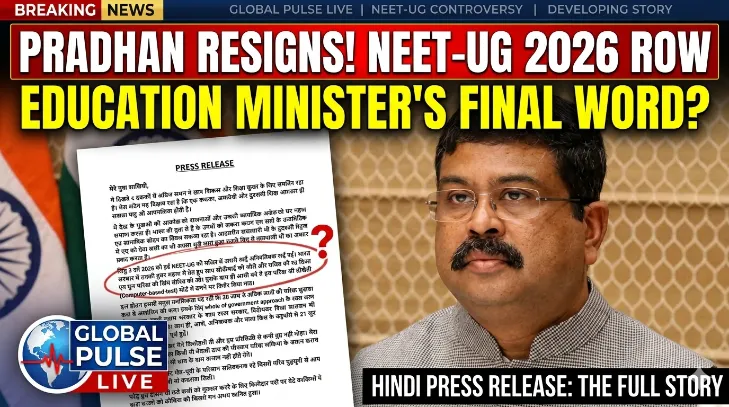
In a two-page resignation statement posted on social media platform X, Pradhan said he had decided to step down to prevent “anti-national forces from exploiting the situation” and to safeguard the future of students.
He stated that he had submitted his resignation to Prime Minister Narendra Modi in the interest of maintaining national unity, preventing legal complications for students, and allowing them to focus on their education and careers.
Pradhan acknowledged that irregularities had surfaced in the NEET-UG examination conducted on May 3, 2026, following which the Central Government immediately transferred the investigation to the Central Bureau of Investigation (CBI), cancelled the examination, and announced a re-test. He also reiterated the government’s decision to conduct future NEET examinations in Computer-Based Test (CBT) mode beginning next year.
The former minister said the government adopted a “whole-of-government” approach to ensure the successful conduct of the re-examination for more than 20 lakh students, with active support from state governments, district administrations, students, and parents.
He added that despite the successful completion of the re-examination on June 21, attempts were allegedly made after the declaration of results on July 16 to mislead students and create confusion, causing him deep concern.
Describing the past ten days as emotionally painful, Pradhan said the issue was never one of personal prestige. He maintained that India’s youth represent the nation’s greatest strength and that he did not want them to become trapped in uncertainty or political conflict.
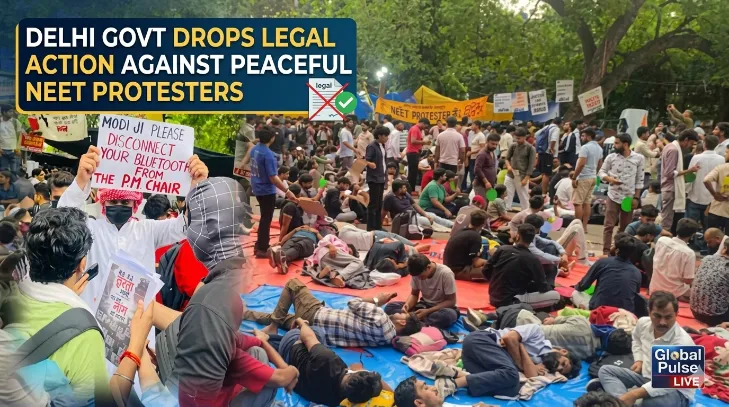
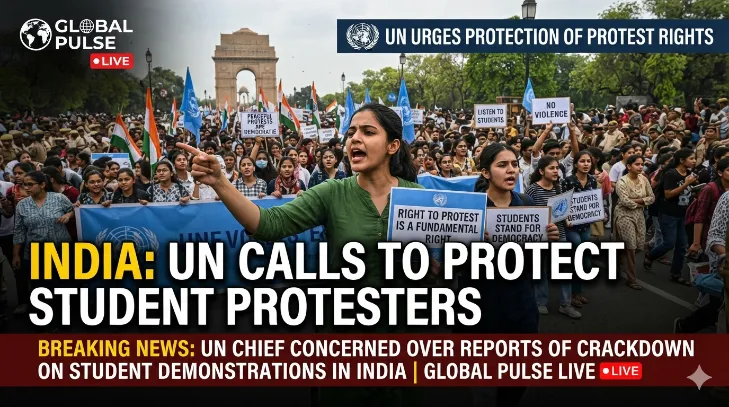
The resignation follows nearly a month of sustained protests at Delhi’s Jantar Mantar, where students, activists, and opposition-backed organisations demanded action over the alleged examination irregularities. The agitation gained national attention after activist Sonam Wangchuk undertook a prolonged hunger strike in support of the students’ demands.
In response to the escalating protests, the Central Government announced a series of measures over the past two days, including the establishment of fast-track courts for paper leak cases, the introduction of a stringent anti-paper leak legislation in Parliament, and assurances that peaceful protesters would not face criminal cases.
The government also announced disciplinary action against officials linked to the examination process, with the National Testing Agency (NTA) terminating 47 officials and initiating legal proceedings against several others.
Pradhan’s resignation marks one of the most significant political developments of the controversy and is expected to have a major impact on the national debate over transparency, accountability, and reforms in India’s competitive examination system. The Centre is now expected to announce a new Education Minister while continuing efforts to restore public confidence in the country’s examination system.