
Nearly a decade after gunmen stormed beachfront hotels in Côte d’Ivoire’s historic town of Grand Bassam, survivor Rose Ebirim still measures time against the trauma of that day.
When she is not organising the annual International Day of Reggae celebrations, Ebirim now spends much of her time cleaning litter from the beaches of the former colonial capital east of Abidjan. She describes the work as a form of healing.
“13 March 2016 was a Black Sunday for me,” she said quietly.
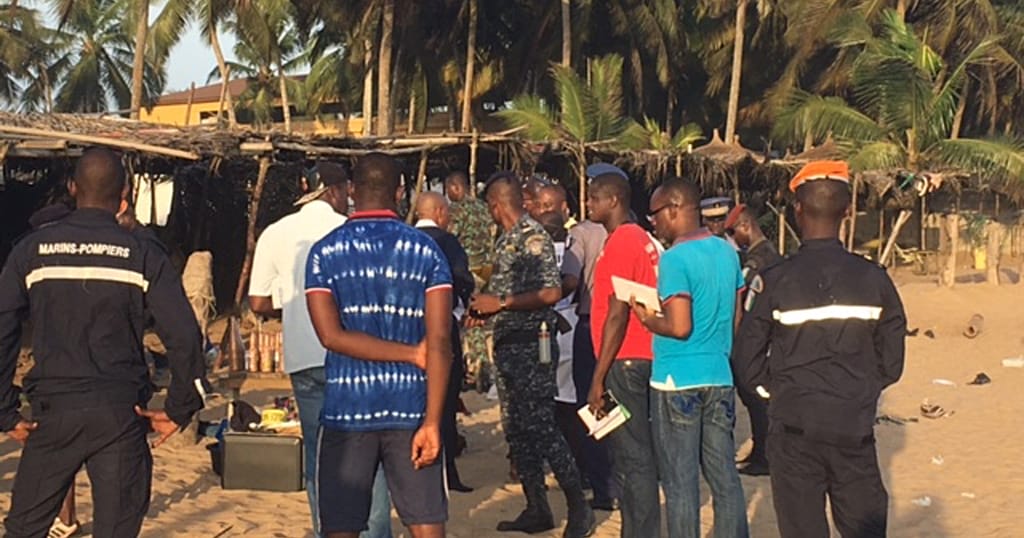
That afternoon, Ebirim watched in horror as armed attackers opened fire on tourists and locals along the beachfront in a coordinated assault that lasted nearly 45 minutes. The gunmen targeted three seaside hotels in Grand Bassam, killing 19 people, including nine foreigners, before security forces shot them dead.
The attack marked the first major jihadist assault on Ivorian soil and shattered the image of Côte d’Ivoire as a relatively stable haven in a region increasingly consumed by militant violence.
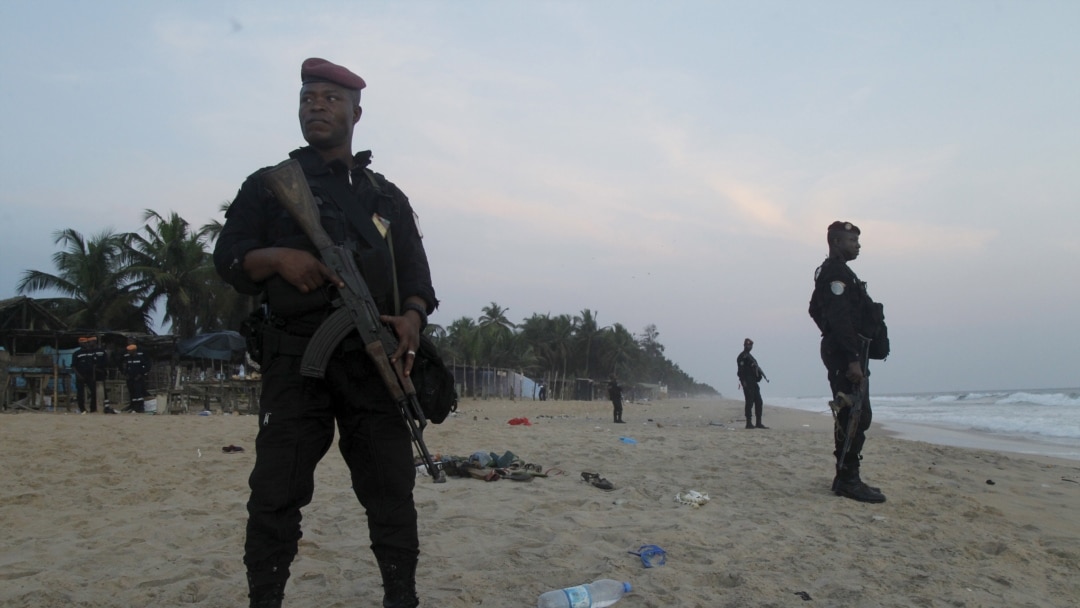
Al-Qaida in the Islamic Maghreb (AQIM) later claimed responsibility, saying the attack was retaliation for Côte d’Ivoire’s cooperation with regional counterterrorism efforts and the transfer of suspected militants to neighbouring Mali.
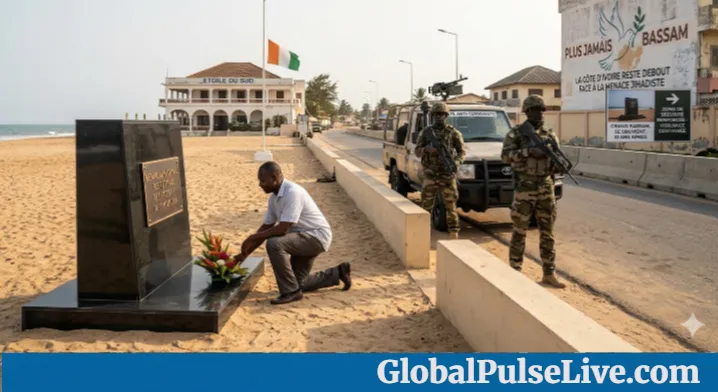
For years, the scars remained visible in Grand Bassam. The once-busy hotels targeted in the massacre now stand shuttered, silent reminders of the violence that unfolded on the Atlantic coast.
In December 2022, an Abidjan court sentenced 11 men — seven of them in absentia — to death for their involvement in the attack.
At a commemoration ceremony earlier this year marking nearly a decade since the killings, Defence Minister Téné Birahima Ouattara said the country had strengthened security measures to prevent another tragedy.
“Our forces have strengthened their operational vigilance to ensure that such tragedies never happen again,” he said.
Today, Grand Bassam remains one of Côte d’Ivoire’s most visited coastal towns, known for its colonial architecture and designation as a UNESCO world heritage site. Beach resorts once again draw tourists and residents from nearby Abidjan, offering an image of calm and recovery.
But beyond the coastline, security concerns continue to grow.
In the country’s north, near the borders with Mali and Burkina Faso, authorities remain on high alert over the spread of jihadist violence from the Sahel. Both neighbouring countries have experienced years of insurgency and political instability, with military juntas increasingly distancing themselves from Western allies and strengthening ties with Russia.
Côte d’Ivoire has emerged as one of the West’s key regional partners in counterterrorism operations, positioned as a strategic buffer between the Gulf of Guinea and militant strongholds deeper in the Sahel.
The violence in neighbouring states has displaced thousands of refugees into northern Côte d’Ivoire, while armed groups linked to al-Qaida continue expanding their operations across the region.
Since 2020, attacks on military positions and security personnel have intensified. In June that year, 14 Ivorian soldiers were killed in the northern village of Kafolo near the Burkina Faso border in an attack claimed by Katiba Macina, part of the broader Jama’at Nusrat ul-Islam wa al-Muslimin (JNIM) coalition.
Security analysts say militant groups are becoming more sophisticated in both strategy and technology.
Héni Nsaibia, senior West Africa analyst for conflict monitoring group Acled, said jihadist factions are increasingly using drones and complex coordinated raids.
“JNIM’s use of armed drones has rapidly proliferated,” he said, noting a sharp increase in attacks over the past year.
In response, the Ivorian government has expanded security recruitment in the north and strengthened military training initiatives. An EU-backed counterterrorism academy established in Jacqueville, west of Abidjan, is training elite units to respond to evolving threats.
Authorities have also focused on development efforts aimed at reducing vulnerability to radicalisation in border communities. New schools, mobile health clinics and agricultural loan programmes have been introduced in remote northern villages where poverty and unemployment create fertile ground for militant recruitment.
Still, many Ivorians remain uneasy about the risks posed by porous borders and dense forest regions that militants could exploit.
Questions also remain over the extent of international military cooperation in the country, including speculation about expanded US security involvement, though the government has not publicly addressed the issue.
For survivors like Ebirim, however, the trauma of Grand Bassam remains deeply personal.
Each year, through music festivals and environmental campaigns, she tries to reclaim a sense of peace in the town where violence once erupted without warning.
“I occupy myself with those activities,” she said. “After 10 years, I’m starting to sort myself out.”