
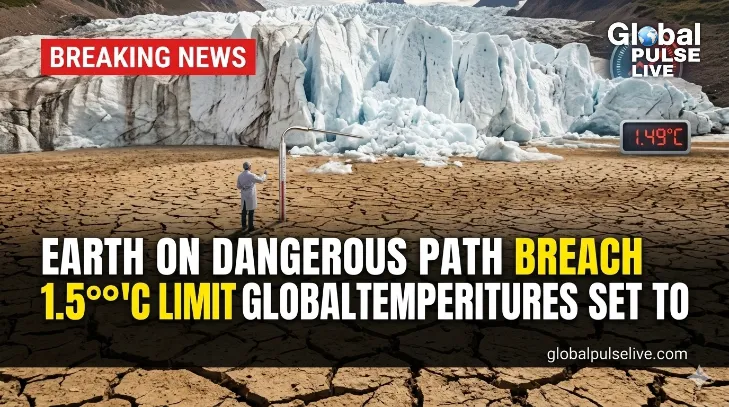
The world is moving toward an “irrecoverable overshoot” of critical climate limits, with billions of people facing severe environmental impacts due to the continued failure of governments to rapidly cut greenhouse gas emissions, a new analysis has warned.
According to a report by Climate Action Tracker (CAT), current government policies could push global temperatures to around 2.7°C above pre-industrial levels by the end of the century. The projection is slightly higher than last year’s estimate of 2.6°C.
The warning comes as countries gather in Antalya, Turkey, for United Nations climate talks, where the growing risk of exceeding the internationally agreed 1.5°C warming limit has become a major focus.
1.5°C Target at Risk
The 1.5°C threshold was established under the Paris Climate Agreement as a key goal to limit the worst effects of climate change. Scientists have warned that crossing this level could increase the frequency and intensity of extreme weather events, including deadly heatwaves, floods, droughts and powerful storms.
Experts have also warned that continued warming could increase the risk of triggering irreversible climate tipping points, creating long-term changes that would be difficult or impossible to reverse.
Governments Urged to Act Faster
UN Secretary-General António Guterres has called on governments to urgently reduce fossil fuel use and accelerate the transition to cleaner energy sources.
The CAT report said that stronger action could significantly reduce future warming. However, even if countries fully meet all their existing climate pledges and long-term commitments, global temperatures could still rise by around 1.9°C by 2100.
Climate experts said many countries have repeatedly failed to meet their own climate promises, creating an urgent challenge for world leaders.
“The choice is clear: continue supporting fossil fuels and face enormous economic losses, rising deaths from heat-related illnesses and climate disasters, or move toward cleaner solutions that are increasingly affordable,” said Bill Hare, CEO of Climate Analytics.
Signs of Progress Amid Growing Concerns
Despite the warnings, the report highlighted some positive developments. Global carbon emissions are expected to decline slightly this year, while investment in renewable energy continues to grow.
Clean energy investment has now surpassed spending on fossil fuels, electric vehicle adoption is increasing rapidly, and deforestation rates in Brazil’s Amazon region have declined significantly.
However, experts stressed that these improvements are not enough to prevent severe climate impacts without much faster action.
Climate Activists Demand Immediate Action
Swedish climate activist Greta Thunberg, who arrived in Antalya for the climate talks, warned that the failure to address climate change threatens communities and ecosystems worldwide.
“Everything and everyone we love is at stake,” Thunberg said, urging governments to take stronger measures.
Sarah Heck, the lead author of the Climate Action Tracker report, said governments are still moving too slowly to avoid the dangers of rising temperatures.
She warned that some major economies, including the United States, Canada and New Zealand, have slowed their climate efforts to a “staggering level.”
The report concludes that while the 1.5°C target is increasingly difficult to achieve, every reduction in emissions remains crucial in limiting the severity of future climate damage.