
A deadly measles outbreak in Bangladesh has killed more than 500 children in recent months, overwhelming hospitals and exposing gaps in the country’s vaccination system following political upheaval last year.
Government health data released on Saturday showed that at least 512 children have died since the outbreak began on 15 March, making it Bangladesh’s deadliest measles surge in decades. Health officials said 13 children had died in the past 24 hours alone, indicating that the crisis is still ongoing despite efforts to contain the spread.
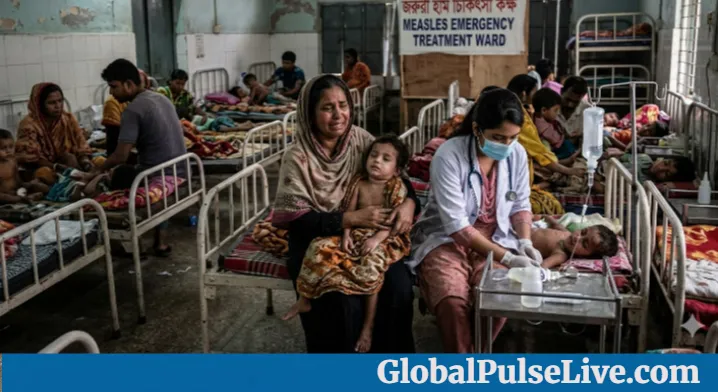
Hospitals across the capital, Dhaka, have been struggling to cope with the rising number of critically ill children. Several medical centres have established dedicated measles wards, but doctors warn that shortages of intensive care beds and overstretched staff are limiting their ability to treat severe cases.
The outbreak has primarily affected children between six months and five years old, many of whom arrived at hospitals already suffering from serious complications.
“Though measles is highly contagious, a healthy baby with no complications can survive with minimal medication,” said Ainul Islam Khan, a paediatrician at Shaheed Suhrawardy Medical College and Hospital in Dhaka.
“Here, most children came to the hospital with respiratory distress and infections in the eyes, throat and lungs,” he added.
Measles is one of the world’s most contagious viral diseases, spreading rapidly through coughing and sneezing. While vaccination can effectively prevent infection, the disease can become deadly in children suffering from malnutrition or weakened immune systems.
Health workers in Bangladesh say the worst-hit children are largely from poor families where access to healthcare and routine immunisation remains limited. Many of the children who died had either missed vaccinations entirely or suffered from chronic malnutrition that left them vulnerable to severe complications.
In response to the outbreak, Bangladesh launched a nationwide emergency vaccination campaign aimed at slowing transmission and protecting vulnerable children.
UNICEF country representative Rana Flowers said this week that the campaign had already reached 18 million children across the country. However, health officials cautioned that it may take months before the full benefits of the immunisation drive are reflected in falling infection and death rates.
The United Nations children’s agency has linked the outbreak partly to disruptions in healthcare services during and after the political unrest that swept Bangladesh in 2024.
Last year’s uprising, which led to the fall of the country’s long-ruling authoritarian government, severely disrupted routine vaccination programmes and public health outreach efforts, according to UNICEF.
The instability left large numbers of children without scheduled immunisations, creating conditions for the disease to spread rapidly once cases began emerging earlier this year.
Despite the rising death toll, Bangladeshi authorities have recently suggested that the outbreak may be beginning to stabilise. Officials say infection rates have declined in some of the areas previously hardest hit by the virus.
Doctors on the ground, however, continue to warn that hospitals remain under intense pressure and that many children are still arriving in critical condition.
Public health experts say the crisis underscores the importance of maintaining strong immunisation systems even during periods of political instability.
UNICEF has called for increased investment in vaccination programmes, disease surveillance systems and hospital infrastructure to prevent future outbreaks.
“Strengthening routine immunisation and health systems is essential,” Flowers said, warning that outbreaks of preventable diseases could become more common if healthcare disruptions continue.
The measles outbreak is now one of Bangladesh’s most serious public health emergencies in recent years, raising concerns about the long-term impact on vulnerable children and the country’s healthcare system.