
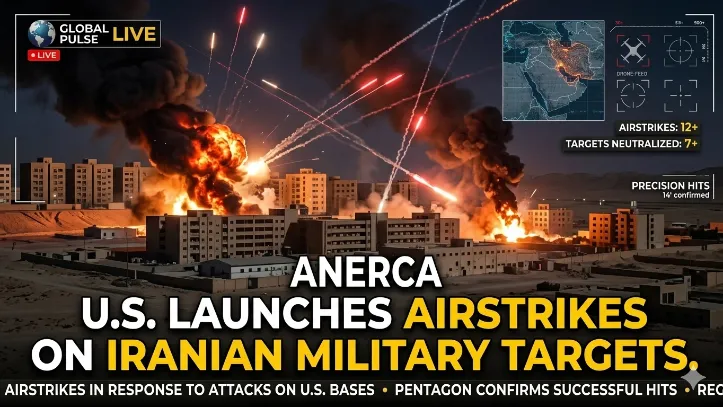
Washington/Tehran: The United States has launched a series of airstrikes against Iranian military targets, marking a sharp escalation in tensions across the Middle East following an alleged Iranian drone attack on a commercial vessel transiting the strategically vital Strait of Hormuz.
According to U.S. defense officials, the strikes targeted missile installations, drone storage facilities and radar sites believed to support Iran’s military operations. Washington said the action was intended to degrade Iran’s ability to conduct future attacks and to protect international shipping lanes critical to global energy supplies.
The operation came after U.S. authorities accused Iran of carrying out a drone strike on a commercial vessel in the Strait of Hormuz, one of the world’s busiest maritime corridors through which nearly one-fifth of global oil shipments pass. The incident has heightened concerns over the security of international trade and energy markets.
American officials described the military response as “precise and proportionate,” emphasizing that the objective was to deter further attacks rather than trigger a broader conflict. The Pentagon said the strikes focused exclusively on military infrastructure and sought to minimize civilian casualties.
Iran strongly condemned the airstrikes, calling them a violation of its sovereignty and warning that it reserves the right to respond. Iranian officials rejected the accusations surrounding the commercial vessel attack and accused Washington of further destabilizing the region through military action.
The latest confrontation has prompted renewed concern among regional and global leaders, who fear the exchange could lead to a cycle of retaliation involving U.S. forces, Iran and allied armed groups operating across the Middle East. Neighboring countries have urged restraint, warning that any further escalation could threaten regional security and international shipping.
Financial markets reacted cautiously to the developments, with investors closely monitoring the situation amid concerns that prolonged instability around the Strait of Hormuz could disrupt global oil supplies and drive energy prices higher.
International diplomatic efforts are now expected to intensify as the United Nations and key global powers call for dialogue to prevent the crisis from escalating into a wider regional conflict.
Security analysts say the coming days will be critical, with the risk of further military exchanges remaining high unless diplomatic channels succeed in easing tensions. The developments underscore the fragile security environment in the Gulf, where maritime incidents have repeatedly threatened regional stability and global economic interests.