
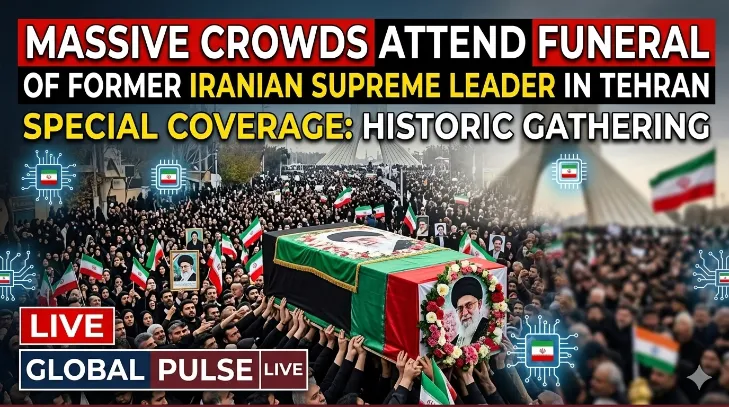
Tehran: Thousands of mourners gathered at Tehran’s Grand Mosalla Mosque on Saturday to pay their final respects to former Iranian Supreme Leader Ali Khamenei, as Iran began an elaborate series of funeral ceremonies intended to honor his legacy and project national unity.
Large crowds, many of whom had waited overnight, entered the sprawling mosque complex carrying Iranian flags and portraits of Khamenei. Streets surrounding the venue filled before dawn as mourners from across the country arrived to participate in the ceremony. Chants of “Death to America” and “Death to Israel” echoed through the gathering, reflecting the strong anti-Western sentiment expressed during the event.
Khamenei, who led Iran for 37 years, was commemorated alongside several members of his family who were also reported to have been killed. His coffin was placed on a raised platform inside the mosque as thousands of mourners offered prayers and tributes.
By early morning, an estimated 10,000 people had assembled inside the open-air mosque, with men and women gathered in separate sections. Organizers described the multi-day funeral procession, spanning several cities, as both a religious observance and a message of resistance. Officials claimed that millions of people could participate throughout the funeral ceremonies.
The event featured religious hymns, recitations, the Iranian national anthem, and eulogies honoring those regarded as martyrs. Many mourners were seen weeping openly, beating their chests in traditional expressions of grief, while volunteers distributed free food, drinking water, and refreshments from hundreds of community service stalls set up around the venue.
Authorities urged attendees to avoid prolonged stays inside the mosque to prevent overcrowding, particularly as temperatures climbed during the day. Large banners honoring Khamenei lined nearby streets, while Hezbollah flags were visible among the crowds.
Several mourners described Khamenei as a symbol of national strength and religious leadership. Others expressed anger toward the United States and Israel, calling for justice and revenge.
However, not all Iranians shared the same sentiments. Some residents chose not to participate in the funeral, citing political differences and concerns over the country’s economic challenges, including rising inflation and shortages of essential goods.
The funeral ceremonies are expected to continue across multiple cities, with organizers aiming to demonstrate national solidarity while reinforcing Iran’s political and religious message in the aftermath of the former leader’s death.