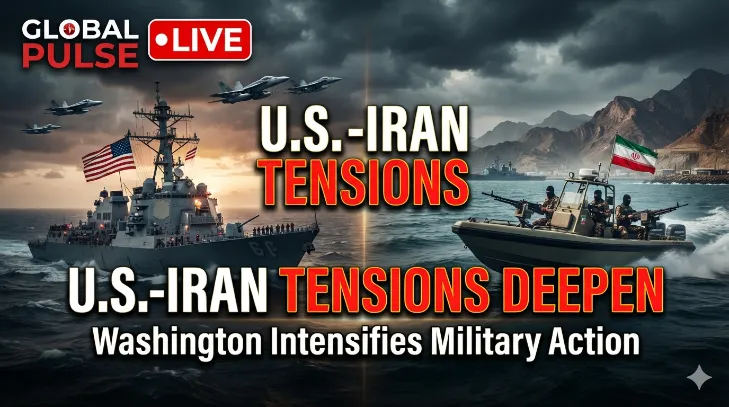
Washington: The confrontation between the United States and Iran has entered a dangerous new phase, with the U.S. carrying out a third consecutive night of military strikes on Iranian military installations. The latest offensive targeted key missile launch sites, drone bases and strategic military infrastructure, further escalating tensions in the Middle East.
Amid the ongoing conflict, U.S. President Donald Trump announced a series of sweeping measures aimed at increasing pressure on Tehran. These include a renewed naval blockade on Iran and the introduction of a 20 percent toll on all cargo vessels passing through the Strait of Hormuz, one of the world’s most critical maritime trade routes.
The Trump administration said the measures are intended to safeguard international shipping and deter further Iranian attacks on commercial vessels and allied interests in the region. However, the announcements have drawn international attention due to their potential impact on global trade and energy supplies.
Iran strongly condemned the U.S. actions, describing them as an act of aggression, and vowed to defend its sovereignty. Iranian officials warned that any attempt to restrict access to the Strait of Hormuz would face a firm response, raising concerns of further military escalation.
The Strait of Hormuz remains a vital global energy corridor through which nearly one-fifth of the world’s oil supply is transported. Any disruption in the waterway could have significant consequences for international oil markets and the global economy.
As military operations continue and diplomatic efforts remain uncertain, world leaders are closely monitoring the rapidly evolving situation amid growing fears that the conflict could widen across the Middle East.