
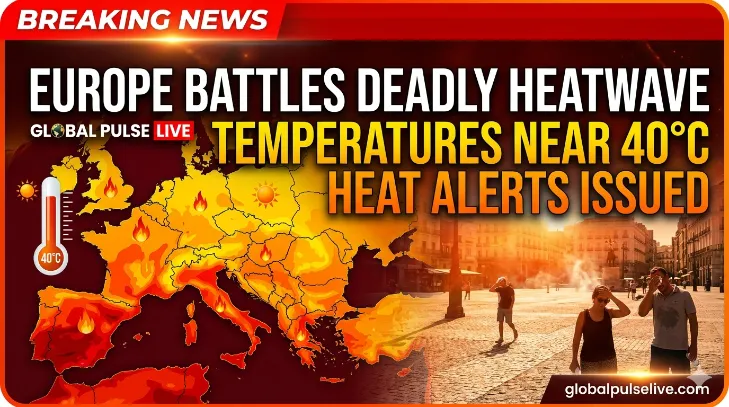
Berlin: A relentless heatwave is tightening its grip on Central Europe, with Germany and Poland preparing for temperatures approaching 40 degrees Celsius, as authorities issue warnings over health risks, transport disruptions and an increased threat of wildfires.
The scorching weather follows a series of extreme heat events that have already claimed dozens of lives across parts of Western Europe, prompting governments to activate emergency response measures. Hospitals in several countries have reported a surge in patients suffering from heatstroke, dehydration and other heat-related illnesses, placing additional pressure on healthcare systems.
In Germany, weather agencies have warned that temperatures could reach their highest levels of the year, with several regions expected to experience prolonged periods of intense heat. Railway operators have cautioned that the extreme temperatures could affect rail infrastructure, leading to delays and cancellations, while road authorities are monitoring highways for potential damage caused by expanding asphalt.
Neighbouring Poland is also bracing for exceptionally high temperatures, with officials urging residents to avoid outdoor activities during peak afternoon hours, remain hydrated and check on elderly and vulnerable people.
The prolonged dry spell has significantly heightened wildfire risks across forests and agricultural regions. Firefighters have been placed on high alert as authorities fear that even a small spark could trigger fast-spreading blazes under the hot, dry conditions.
Climate experts say Europe is experiencing increasingly frequent and intense heatwaves as global temperatures continue to rise. Scientists warn that such extreme weather events, once considered rare, are becoming more common due to climate change, underscoring the need for stronger adaptation measures and improved public preparedness.
Several cities have opened cooling centres, increased public water distribution and advised employers to modify outdoor work schedules to reduce exposure to dangerous heat.
Meteorologists expect the heatwave to persist over the coming days before cooler Atlantic air gradually brings relief to parts of Central Europe. However, officials continue to urge the public to remain vigilant, as the combination of extreme heat, drought and wildfire danger poses a significant challenge across the region.