

Each dialysis session lasted nearly four hours and cost thousands of rupees, turning daily life into a relentless cycle of hospital visits and uncertainty.
Today, however, he speaks with relief and gratitude after undergoing a successful kidney transplant surgery at Nizam’s Institute of Medical Sciences (NIMS) free of cost.
“Undergoing dialysis regularly is an immense pain and struggle. It is a hardship one wouldn’t wish even upon an enemy,” he said. “But after undergoing a kidney transplant at NIMS, it feels as if I have been born again.”
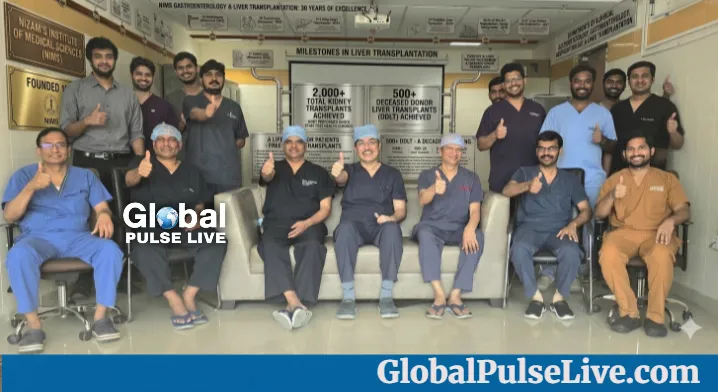
Ramesh is one among thousands of patients whose lives have been transformed by the institute’s kidney transplant programme, which this week crossed a major milestone with the successful completion of its 2,000th kidney transplant surgery.
The achievement marks a significant moment for one of India’s leading public healthcare institutions, particularly because nearly 90 per cent of the procedures were performed free of cost for economically disadvantaged patients through government-backed schemes such as Aarogyasri and the Chief Minister’s Relief Fund (CMRF).
Hospital officials said the remaining surgeries were conducted at highly subsidised rates, making advanced transplant care accessible to patients who otherwise could not afford private treatment.
While kidney transplantation in private hospitals can cost up to ₹20 lakh including medication and post-operative care, NIMS has been able to perform the procedure for less than ₹3 lakh, significantly easing the financial burden on families.
The kidney transplant programme at NIMS began in 1989, when the institution performed its first transplant surgery — considered a landmark achievement at the time. Doctors at the hospital say the recipient of that first transplant continues to remain healthy decades later.
Since then, the programme has steadily expanded, with 500 kidney transplant surgeries completed in just the past three years alone.
The driving force behind the programme has been Dr Rahul Devraj, head of the Department of Urology at NIMS, along with a team of specialists including Dr Ram Reddy, Dr Vidyasagar and Dr Ramachandraiah.
Hospital Director Prof. Beerappa praised the medical staff for their dedication and credited the support of the Telangana government for helping sustain and expand free transplant services.
He also thanked Telangana Chief Minister Revanth Reddy and Health Minister Damodar Raja Narasimha for strengthening healthcare support systems and funding organ transplant initiatives in public hospitals.
Congratulating the NIMS medical team, the Telangana government said it plans to further expand organ transplant facilities across state-run hospitals to support underprivileged patients.
Officials also announced that a dedicated Organ Transplantation Centre is being established at Telangana Institute of Medical Sciences (TIMS).
According to Dr Rahul Devraj, NIMS has maintained a strong record of transplant success over the years.
“In fact, the success rate stands at 95 per cent during the first year following the surgery,” he said.
He added that kidneys transplanted from live donors continue functioning successfully in nearly 85 per cent of recipients even after five years, while kidneys retrieved from brain-dead donors show an 80 per cent long-term success rate.
Doctors caution, however, that transplantation is only the beginning of a lifelong medical journey. Recipients must continue taking immunosuppressant medication to prevent the body from rejecting the transplanted organ and require regular medical monitoring for years after surgery.
Dr Devraj stressed that successful organ transplantation is the result of coordinated teamwork rather than the efforts of a single doctor.
“A kidney transplant is not a task a single physician can accomplish alone,” he said. “From retrieving the donor’s kidney to implanting it in the recipient, and providing years of post-operative follow-up care, the entire process results from the collective effort of over 50 doctors and staff members.”
For patients like Ramesh, that collective effort has meant far more than a medical procedure — it has meant a second chance at life.