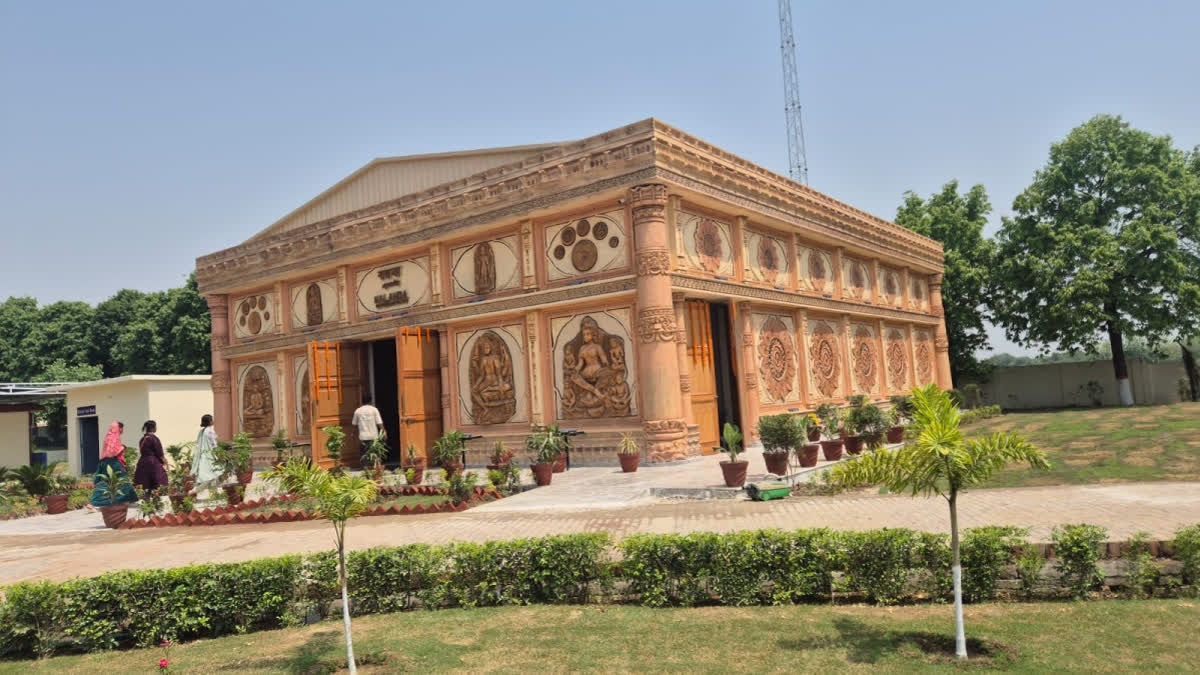

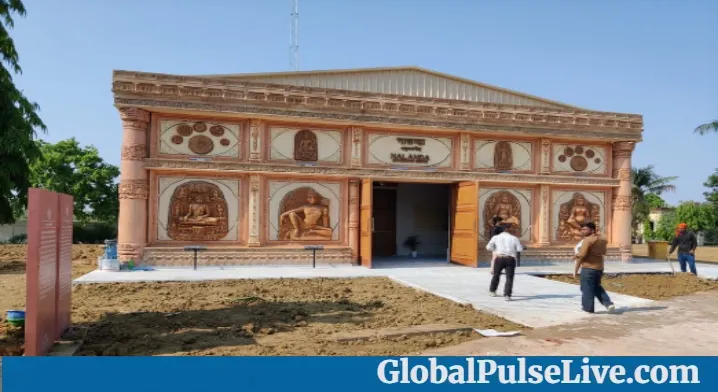
One of India’s most historically significant museums has reopened with a dramatic technological transformation. The Nalanda Archaeological Museum officially reopened on International Museum Day after undergoing a major experiential and digital upgrade led by the Archaeological Survey of India in collaboration with Indian Institute of Technology Delhi.
The initiative was guided by IIT Delhi’s Department of Design, led by Professor of Practice Sabyasachi Paldas and Assistant Professor Aakash Johry, alongside Anand Madhukar, Additional Director General (Administration), ASI, and museum director Vasant. The institutions partnered with Indian startup Vizara Technologies Pvt. Ltd. to modernise the museum and create a more interactive visitor experience.
The result is a museum that now blends ancient history with immersive storytelling technologies — a fitting evolution for a site that preserves the remains of one of the world’s earliest centres of higher learning.
A Museum Built Around One of History’s Greatest Universities
Located opposite the ruins of the legendary Nalanda Mahavihara in Bihar, the museum performs the quiet but extraordinary task of preserving the fragments of a civilisation that once shaped intellectual life across Asia.
Established in 1917 by the ASI, the museum houses more than 13,000 artefacts excavated from the ancient Nalanda ruins, though only a portion is currently displayed to the public.
If modern universities function like knowledge networks, ancient Nalanda was their original blueprint. Flourishing between the 5th and 12th centuries CE, Nalanda attracted scholars from China, Korea, Tibet, and Central Asia long before international education became a global industry. Thousands of students and teachers reportedly studied subjects ranging from Buddhist philosophy and medicine to astronomy, mathematics, and metaphysics.
The university’s destruction during invasions in the late 12th century marked the collapse of one of the ancient world’s greatest academic ecosystems.
What survived now lives inside the museum.
Its galleries contain black basalt Buddha sculptures, bronze figurines, terracotta seals, copper plates, inscriptions, coins, and pottery that collectively reconstruct fragments of scholarly life from centuries ago. Particularly significant are the monastery seals and inscriptions, which reveal how organised and interconnected Nalanda’s intellectual community once was.
Walking through the museum often feels less like visiting a conventional gallery and more like exploring the surviving code of a lost civilisation.
Technology Meets Ancient History
The newly upgraded museum now aims to make that history more accessible and immersive for modern audiences.
One of the major highlights is a state-of-the-art immersive hall featuring a 360-degree cinematic experience designed to recreate the story, culture, and global significance of ancient Nalanda. Through digital projection and immersive storytelling, visitors can now engage with the site in a more experiential way rather than simply observing artefacts behind glass displays.
The broader project also focused on creating educational content for students, tourists, and history enthusiasts, while modernising museum infrastructure and improving visitor engagement.
Anuj Kaushal, CEO of Vizara Technologies, described the project as both ambitious and deeply collaborative.
“It was a challenging project, but our team worked day and night to accomplish it, and the outcome has come out beautifully,” he said. “ASI and IIT supported us throughout the journey, and together we worked as one team to bring this museum back to life again.”
Preserving the Past, Speaking to the Present
The reopening of the Nalanda Archaeological Museum represents more than a renovation project. It reflects a growing effort within India’s cultural institutions to rethink how history is presented in the digital age.
Museums today are no longer expected to merely display objects. Visitors increasingly seek experience, immersion, and emotional connection — especially younger audiences raised in interactive digital environments.
By combining archaeological preservation with immersive technology, Nalanda’s new avatar attempts to bridge that gap.
And perhaps there is something poetic about one of the world’s oldest knowledge centres now embracing some of the world’s newest storytelling tools.