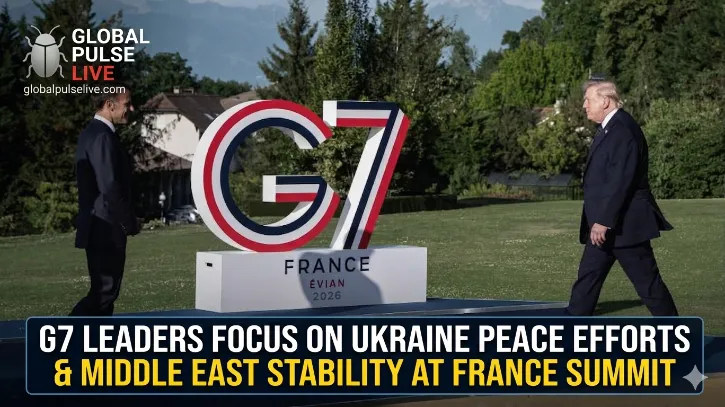
Evian-les-Bains, France : Leaders of the Group of Seven (G7) nations convened for a crucial day of discussions on Tuesday, focusing on efforts to end Russia’s war in Ukraine and address escalating tensions in the Middle East, as global security challenges continue to dominate the international agenda.
Ukrainian President Volodymyr Zelenskyy attended the summit at the invitation of host nation France, joining world leaders in discussions aimed at finding a pathway toward peace in Ukraine. The talks come shortly after U.S. President Donald Trump announced a diplomatic agreement to conclude the three-and-a-half-month-long conflict between the United States and Iran, shifting global attention back to the war in Eastern Europe.
Speaking during a bilateral meeting with French President Emmanuel Macron, Trump revealed that he had held productive conversations with both Zelenskyy and Russian President Vladimir Putin on Sunday. He indicated that with the Iran conflict now resolved, the focus would return to efforts to end the prolonged Russia-Ukraine war.
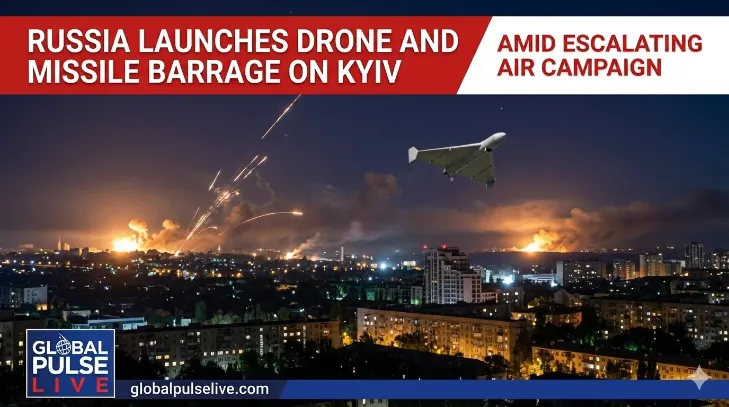
French President Macron emphasized the importance of maintaining international support for Ukraine and increasing pressure on Russia to reach a peace settlement. His remarks came just hours after Russia launched one of its largest aerial assaults in recent months, firing hundreds of drones and dozens of missiles at major Ukrainian cities. The attacks reportedly killed at least 11 people and damaged significant infrastructure, including a religious landmark.
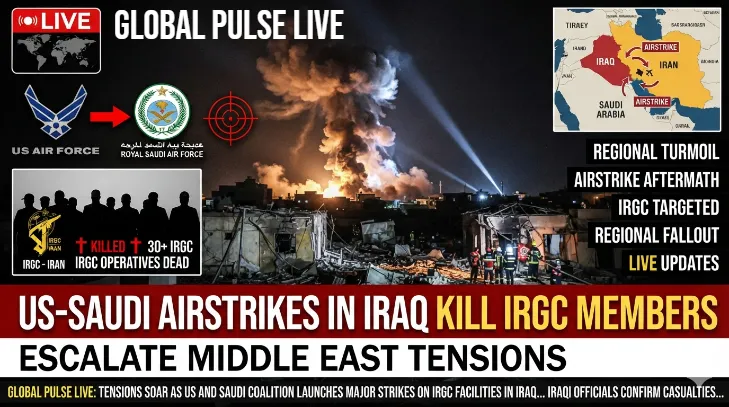
A key session of Tuesday’s summit, held in the picturesque French town of Evian-les-Bains, was dedicated to “ending crises and ensuring stability in the Middle East.” Leaders from Egypt, Qatar, and the United Arab Emirates joined G7 members for discussions on regional security and economic stability.
Despite repeated diplomatic initiatives, progress toward ending the Ukraine conflict remains elusive. Trump, who previously claimed he could resolve the war within 24 hours if returned to office, has acknowledged the complexities involved in achieving a lasting peace agreement.
Macron stressed that any meaningful negotiations must involve direct participation from Ukraine and Russia, while also including European and American representatives to ensure a balanced and durable outcome.
Meanwhile, Ukraine marked a significant milestone by officially launching negotiations for membership in the European Union. The accession process is expected to require years of political and economic reforms, even as the country continues to defend itself against Russian military aggression. Ukrainian officials view EU membership as a critical guarantee of long-term stability and security after the war.
The Middle East situation also featured prominently on the summit agenda. Recent disagreements between Trump and several European leaders—including Macron, British Prime Minister Keir Starmer, German Chancellor Friedrich Merz, and Italian Prime Minister Giorgia Meloni—over the U.S. military intervention in Iran have strained relations among allies.
However, summit participants appeared determined to maintain a cooperative tone, particularly given concerns over global energy markets. Rising oil prices linked to disruptions in the Strait of Hormuz have heightened fears of economic instability.
Ahead of the summit, the leaders of France, Germany, Italy, and the United Kingdom, joined by Canada, issued a joint statement welcoming the diplomatic breakthrough between the United States and Iran. They called for swift implementation of the agreement and the reopening of the Strait of Hormuz, a vital shipping route for global oil supplies.
Macron reaffirmed that France and its Western partners stand ready to support efforts to restore maritime security in the region. Trump, however, suggested that a large-scale international military deployment may not be necessary, while expressing openness to limited multinational naval cooperation.
In addition to discussions with Zelenskyy, Trump’s schedule included meetings with the Emir of Qatar and the President of the United Arab Emirates, followed by cultural events and a formal dinner with fellow G7 leaders.
The G7 comprises France, the United States, Canada, Germany, Italy, Japan, and the United Kingdom. Several partner nations, including Brazil, India, Kenya, and South Korea, were also invited to participate in selected summit discussions, underscoring the growing importance of international cooperation in addressing global challenges.